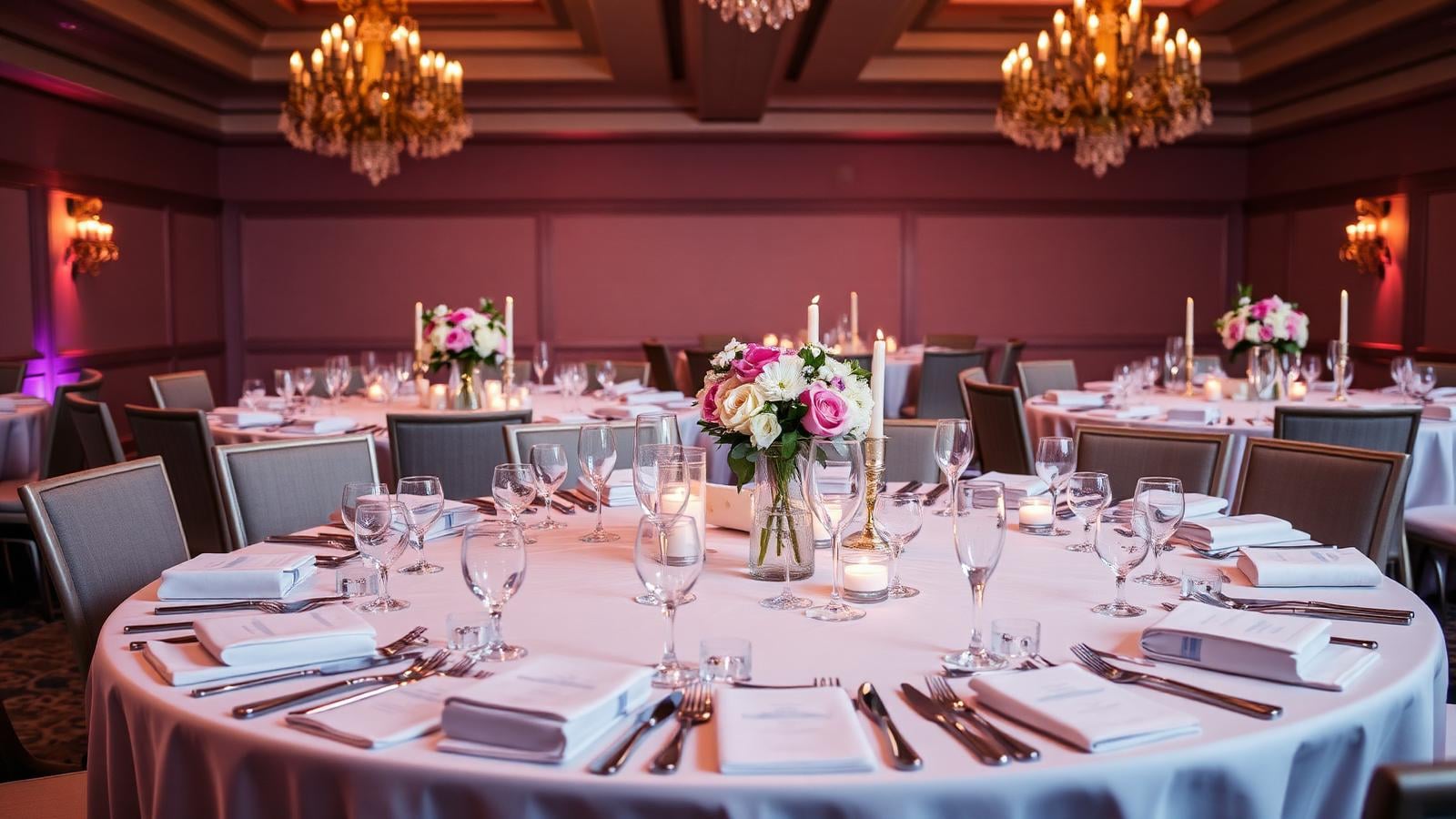
Who sits next to whom? This question often decides how lively a wedding reception turns out. We'll show you how to create a seating plan where everyone feels comfortable - even the aunt who's no longer speaking to the mother-in-law.
Tables First, Then Guests
Before you start assigning names, figure out which table shape suits the venue and the atmosphere. Round tables (8-10 people) are classic and great for conversation. Long banquet tables look festive but allow for less mingling between tables. A U- or T-shape has a more formal, stately feel.
Allow about 60-70 cm of table width per person. And don't forget enough space between rows of chairs so the serving staff can get through easily.
The Head Table
Traditionally, the couple sits in the middle of a long table with family and the best man and maid of honor. A modern alternative is a "sweetheart table" just for the two of you, so you can enjoy a quiet moment together between courses.
Important: from your seats, you should be able to see as many guests as possible - that makes speeches, toasts and eye contact so much easier.
Defusing Family Conflicts
Divorced parents, feuding siblings, old grudges - almost every family has its stories. Don't seat these people right next to each other, but don't banish them to far-off tables either, where it would be obvious.
A tried-and-tested trick: create small, harmonious "clusters" - people who know and like each other sit together. Always place "bridge people" between the conflicting parties.
Mix or Not?
Mixing everyone up completely (family and friends all together) leads to new connections but can also make people uncomfortable. Separating completely (your friends, their friends) feels like two different weddings.
The happy medium: give each table a main theme (e.g. "college friends"), but add 1-2 people from other circles as a bridge. It works almost every time.
Visualization & Last-Minute Changes
Don't plan on a scrap of paper - plan visually. With a seating plan tool, you can instantly see whether tables are overbooked or someone has been forgotten. With Zweierteam, you can create your seating plan online for free.
Last-minute cancellations or RSVPs always happen. Have a plan B ready: which table still has room? Which two people would get along if a table shrinks?